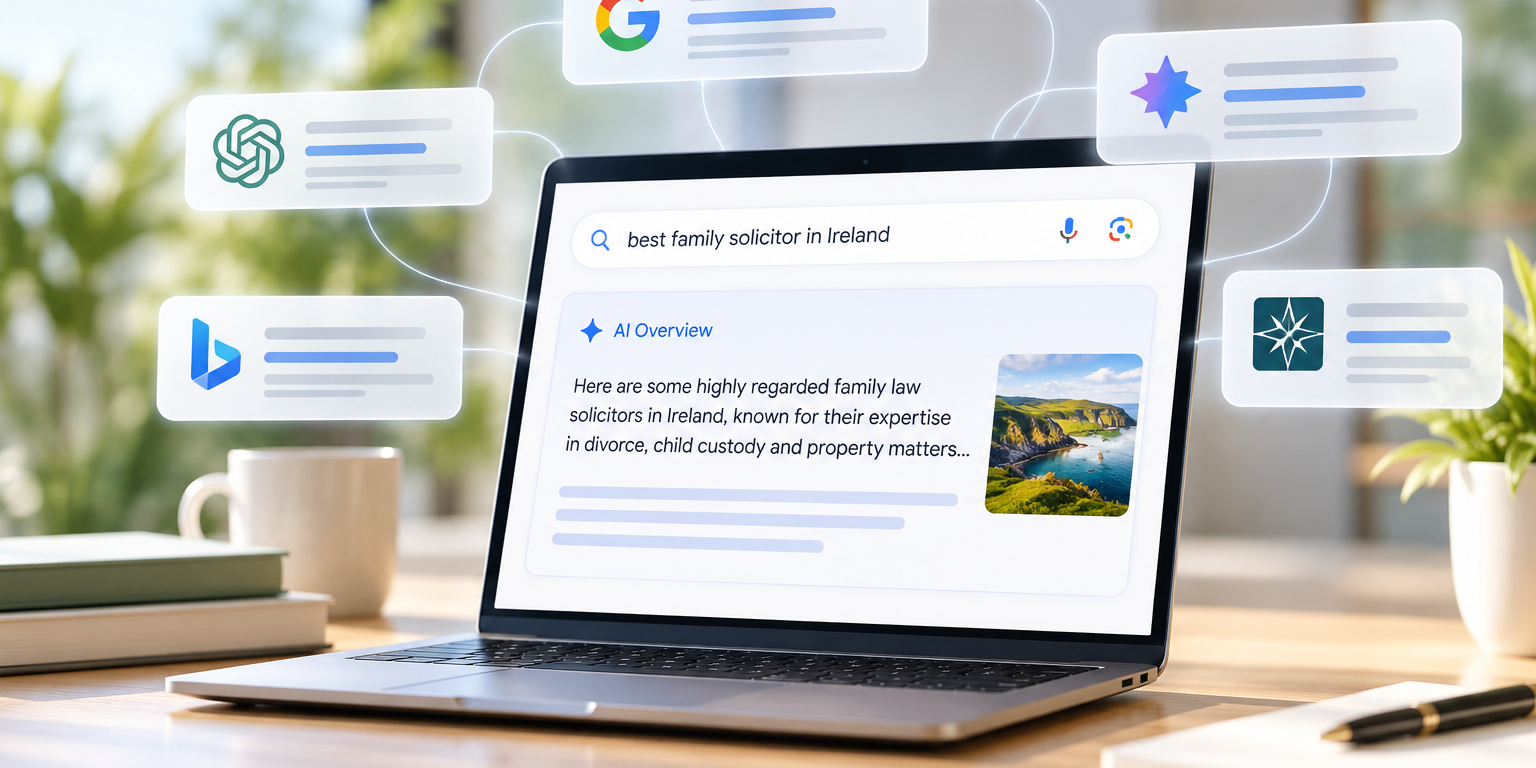
When an AI tool answers a question and includes a small link or names a website as a source, that is a citation. For businesses, being cited is the AI-era version of appearing on the first page of results: it shows your content was considered useful or trustworthy enough to support an answer.
An AI citation is a source that an AI-generated answer links to, names or draws on, showing where some of its information came from.
Not every AI tool shows its sources, and not every source it uses is shown. But where citations appear, they have become one of the clearest signals of who an AI tool is relying on.
Citation, mention and recommendation: what is the difference?
These terms are often mixed up, and each means something different for your business:
- Mention: the AI names your business in its answer, with or without a link.
- Citation: the AI links to or names your website or content as a source for part of its answer.
- Recommendation: the AI suggests your business as a good option for the person’s need.
A business can be mentioned without being cited, or cited without being recommended. All three matter, and together they make up your AI visibility.
Why citations matter
- They put you in the answer. Being cited places your business in front of someone at the moment they are looking for help.
- They signal trust. When an AI tool points to your content, it works like a recommendation from a third party.
- They can bring visitors. Many people click a source to verify what they read or to learn more.
- They show what AI relies on. The sources an AI tool cites for your topic reveal what it considers credible, including competitors and third-party sites.
- They help you check accuracy. If a cited source is outdated or wrong, you know exactly what to fix.
How AI tools choose sources
The exact methods are not public and differ by tool, so nobody can give you a guaranteed formula. But the sources AI tools tend to use share common traits:
- They are relevant to the exact question being asked.
- They are clear and specific, with direct answers and concrete detail.
- They appear trustworthy, with named authors, credentials, reviews or recognised reputations.
- They are current, or clearly dated.
- They are consistent with other reliable sources.
- They are accessible, meaning the page can be crawled and read.
- For local businesses, they are often third-party sources such as directories, review sites and local publications, not only the business’s own website.
What makes content easy to cite
- An answer-first structure, which is central to AEO
- Specific facts, such as timeframes, ranges, steps and conditions
- Original insight, data or case studies that are not available everywhere
- Named authors with relevant credentials or experience
- Clear dates, with regular updates
- Descriptive headings that match how people ask questions
- Sources for your own claims, linked where helpful
- A stable web address and a page that loads quickly
How to check whether you are being cited
- Ask several AI tools. Use the questions your customers would ask, and note which sources each tool shows.
- Record the results. Track whether your business is mentioned, cited or recommended, and which competitors and websites appear.
- Look at referral traffic. Your website analytics may show visits from AI tools.
- Use Search Console where available. Some reports show how your pages appear in AI features.
- Note third-party sources. If directories or review sites are cited more than your own website, make sure your listings there are accurate and complete.
- Repeat monthly. Citations vary over time, so look for patterns.
How to earn more citations
- Create citation-worthy resources. Original research, definitive guides, templates, checklists and detailed case studies give tools a reason to point to you.
- Answer questions directly. Use the AEO approach: clear question, clear answer, supporting detail.
- Show your expertise. Add author bios, credentials and first-hand examples.
- Keep content current. Add dates and update pages when information changes.
- Build credible presence elsewhere. Accurate listings, partnerships, industry associations and genuine press coverage all strengthen your overall GEO footprint.
- Make claims verifiable. Link to sources, show evidence and be specific about results.
- Check technical access. Make sure important pages can be crawled and that you are not accidentally blocking them.
- Monitor and improve. Review results regularly and strengthen the pages that matter most.
A quick citation-readiness checklist
Before you publish or update an important page, ask:
- Does it have one clear purpose?
- Is the main answer in the first paragraph?
- Does it include specific facts, not just general claims?
- Is there a named author or responsible expert?
- Is it dated, and is the information current?
- Are the headings clear and descriptive?
- Are sources linked where claims need support?
- Can search tools reach and read the page?
- Does it offer something a competitor’s page does not?
What to avoid
- Invented statistics or fake sources. They can cause serious damage to trust.
- Mass-produced thin pages. Many shallow pages are less useful than one strong resource.
- Hidden text or tricks aimed at AI systems. They are unreliable and can breach platform rules.
- Fake reviews. They are unethical and risky.
- Copying other people’s work. It adds no value and creates legal risk.
Common mistakes
- Expecting citations from thin or generic content
- Ignoring the third-party sites that AI tools cite instead of yours
- Not tracking results, so you cannot tell what is working
- Making claims without evidence
- Blocking crawlers by accident, or without understanding the trade-off. Some businesses choose to limit AI access, but content that cannot be read cannot be cited
Frequently asked questions
Can I ask an AI tool to cite my business? Not reliably. Tools decide what to use based on their own methods. You can only make your content easier to find, understand and trust.
Does being cited always bring traffic? No. Some people read the answer and never click. Even then, being named as a source can build awareness and trust.
Is an AI citation the same as a backlink? No. A backlink is a link from one website to another. A citation is a source shown or named in an AI answer. They are related, and strong content tends to earn both.
Can an AI citation be wrong? Yes. A tool can cite a page that does not actually support its statement, or use outdated information. Always verify important claims.
Where to go next
To see how this fits into the wider picture, read about AI search and AI visibility. To improve how your content is used, explore AEO and GEO. To understand the technology behind the answers, see large language models.
Ready to be cited where it matters? Let’s talk or browse the Marketing Terms Glossary.