
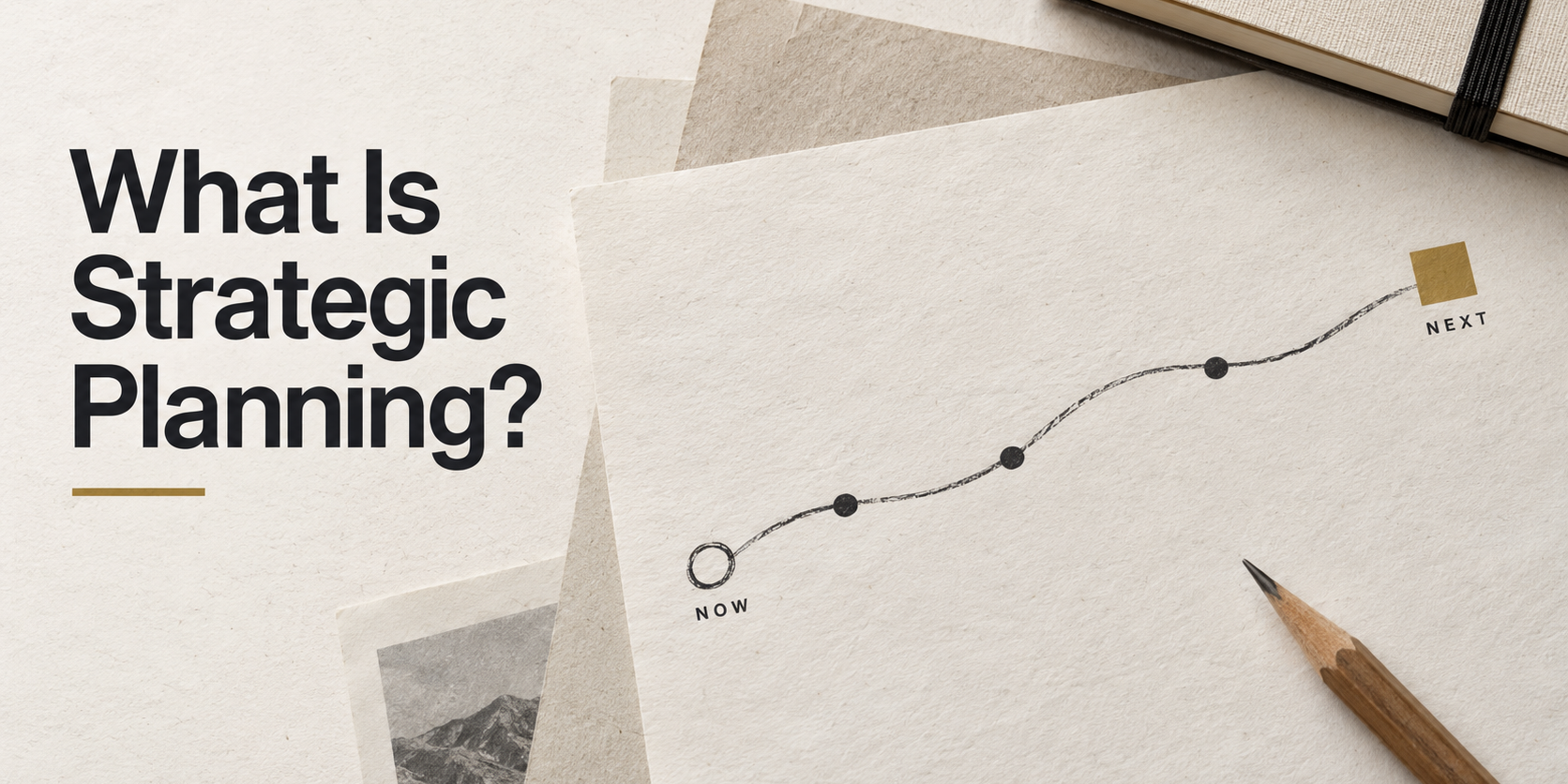
Strategic planning is the process of deciding where an organisation wants to go, how it will get there and how progress will be measured.
It gives business owners and leadership teams structured time to step back from daily operations, assess the current position and make informed choices about the future.
The result should not be an impressive document that is reviewed once a year. A useful strategic plan becomes a working guide for decisions, priorities, budgets and accountability.
Why Strategic Planning Is Important
Daily business demands can easily take over. Urgent client work, staffing issues, sales targets and operational problems compete for attention. Without a planning process, short-term needs can repeatedly displace long-term priorities.
Strategic planning helps a business move from reaction to intention.
It gives leaders an opportunity to consider questions such as:
- Where are we now?
- What is changing around us?
- Where do we want to be?
- What could prevent us from getting there?
- Which opportunities deserve our attention?
- What must happen next?
The Strategic Planning Process
1. Assess the current position
The process begins with an honest review of the business. This may include financial performance, customer feedback, market position, team capabilities, operational challenges and marketing results.
The aim is to establish a shared understanding of reality. Good planning cannot be built on assumptions or incomplete information.
2. Review the external environment
Businesses do not operate in isolation. Customer behaviour, economic conditions, technology, regulation and competitor activity can all affect the strategy.
For example, the growth of AI-assisted search is changing how customers research businesses. Organisations that once focused only on traditional Google rankings may now need to consider whether their expertise is clear, credible and easy for AI systems to understand and reference.
3. Clarify the vision and objectives
The leadership team needs a clear view of what it wants the business to achieve. Objectives should be meaningful, specific and connected to the company’s wider purpose.
Too many priorities create confusion. A focused plan identifies the small number of outcomes that matter most.
4. Choose the strategic priorities
This is where planning becomes strategy. Leaders must decide which opportunities to pursue, which capabilities to strengthen and which activities to stop.
Priorities might include entering a defined market, improving profitability, developing a new service, strengthening the leadership team or building a more effective digital presence.
5. Create an action plan
Each priority needs clear actions, owners, deadlines and resources. If responsibility is shared by everyone, it is often owned by no one.
The plan should make it clear what needs to happen in the next 90 days as well as over the longer term.
6. Measure and review progress
Strategic plans should be reviewed regularly. Leadership teams need to track relevant KPIs, address delays and adjust actions when conditions change.
Reviewing the plan does not mean constantly changing direction. It means learning from evidence while protecting the central priorities.
 Common Strategic Planning Mistakes
One common mistake is setting too many goals. A long list can create the appearance of ambition but often weakens focus.
Another is failing to involve the people responsible for implementation. Employees do not need to make every strategic decision, but they do need to understand the direction and their role in delivering it.
Businesses can also confuse a financial target with a strategy. Revenue growth may be an objective, but the plan must explain where that growth will come from and what needs to change.
Finally, many plans fail because there is no review rhythm. Priorities slowly disappear beneath everyday work.
Connecting Strategic Planning and Marketing
Marketing should be part of the planning conversation from the beginning.
If the business intends to enter a new market, marketing must build awareness and credibility with that audience. If it wants to increase the value of existing client relationships, communication and retention may become more important. If the aim is to establish specialist authority, content, search visibility and reputation need to reflect that position.
When the strategic plan changes, the marketing priorities may need to change too.
From Intention to Action
Strategic planning is valuable because it creates alignment. It helps leaders make consistent choices, gives teams a shared direction and turns broad ambition into specific action.
At Strategic Results Marketing, we help businesses translate strategic priorities into focused marketing action. The goal is not to do more for the sake of it. It is to ensure that the work being done supports the future the business is trying to build.
Related Resources
- What Is Business Strategy? – Understand the choices that give a business its long-term direction.
- What Is Marketing Strategy? – Learn how to align marketing decisions with strategic priorities.
- What Is Competitive Advantage? – Explore how distinctive strengths influence strategic choices.
- What Are KPIs (Key Performance Indicators)? – See how KPIs help leadership teams review strategic progress.